Customer & member portals
Give customers a place to sign in, view project progress, share documents, submit requests, or manage account details. Plan permissions around what each person should be able to see and do.
Custom development · Greater Orlando & Central Florida
Some businesses need a great place to be found. Others need a website that customers and teams can actually work in. Austin Munday Web Development builds both.
From interactive tools to custom web applications, I turn a specific business need into a clear plan, a thoughtful interface, and working software.
The right level of development
A barbershop may need services, hours, a gallery, and a booking link. A contractor may need project photos and a clear route to a quote. A focused local business website is often the right fit.
Custom development becomes useful when people need to sign in, work with data, calculate a result, make a purchase, or complete a process that an ordinary page cannot handle. We start with the job you need done and decide whether an existing platform, a custom feature, or a complete application makes sense.
What we can build together
These are project types we can explore and scope around your business. The features, integrations, and operating requirements determine the proposal.
Give customers a place to sign in, view project progress, share documents, submit requests, or manage account details. Plan permissions around what each person should be able to see and do.
Bring orders, jobs, tickets, inventory, or customer records into one workspace. Build searchable records, useful reporting, exports, and workflows that fit how your team operates.
Help customers choose a service, request a time, or book an appointment. Connect an established scheduling service or scope custom availability, staff calendars, reminders, and deposits.
Create product catalogs, checkout experiences, paid memberships, or subscription features. Payment processing runs through an appropriate provider, with order management and recurring needs planned from the start.
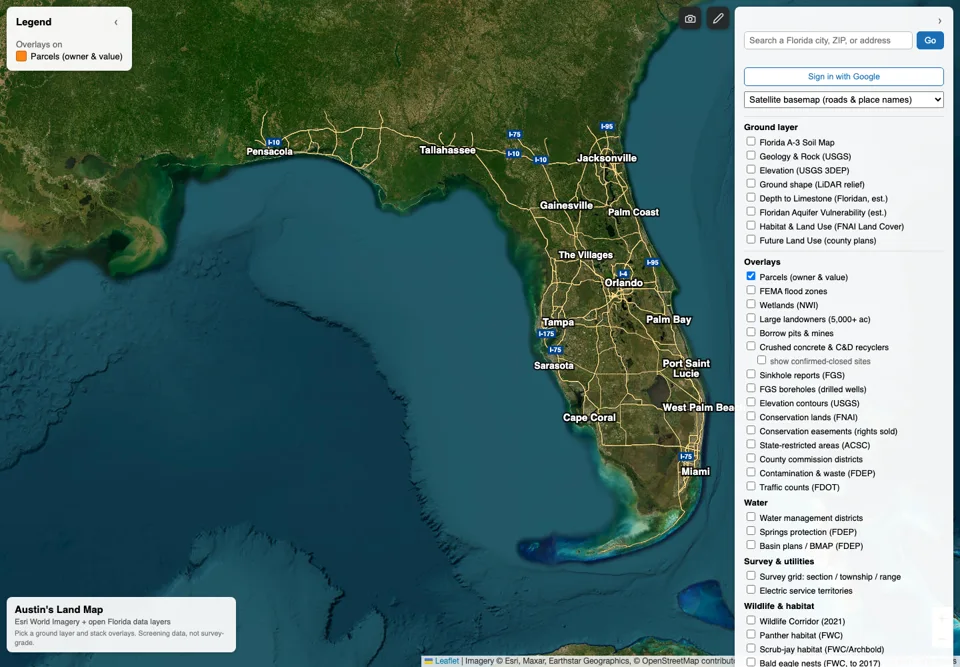
Make location and listing data useful with interactive maps, filters, search, and detail pages. Data availability, permissions, licensing, and refresh frequency shape the implementation.
Turn your pricing rules or operating assumptions into a usable estimator, configurator, or calculator. Help customers explore options or give your team consistent results and shareable reports.
Connect forms, customer management software, accounting tools, calendars, and other services through supported integrations. Reduce repeat data entry and define how updates and failures are handled.
Build tools for creating, organizing, reviewing, and publishing content. Projects can include uploads, editing controls, approval steps, exports, and carefully scoped AI-assisted features.
Develop a focused first version of a larger product, from a specialist directory to a software service. Define account management, data storage, administration, and the most useful launch features before expanding.
What sits behind the interface
A useful application needs more than a good-looking screen. We plan the data, access rules, mobile experience, and the way information moves through the system.
Your proposal can cover database design, account permissions, input validation, third-party integrations, backups, monitoring, and ongoing maintenance. We identify sensitive information and any specialist compliance requirements early.
You will know which services the project depends on, who controls the accounts, and what needs attention after launch. Capacity, hosting costs, and future changes are part of the conversation.
A few working examples
Explore Austin’s own public projects to see the range of work beyond a typical business website.
An interactive Florida map bringing satellite imagery, parcel information, and public data layers into one workspace.
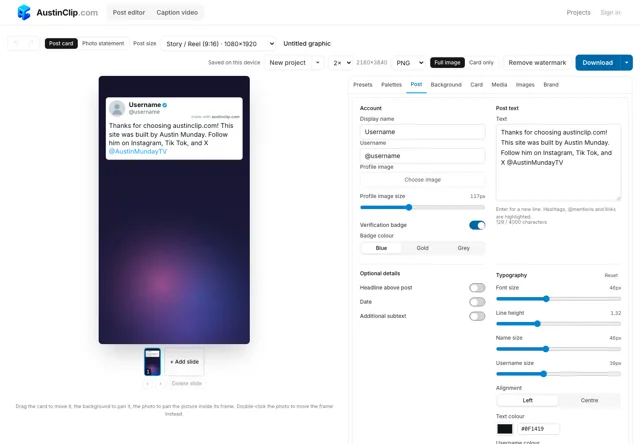
A browser-based content creation workspace with design controls and export options for social graphics and captioned video.
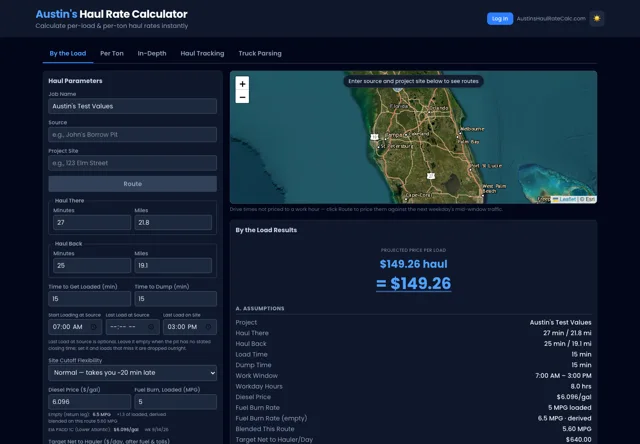
A business calculator combining route inputs and operating assumptions to work through haul rates and printable reports.
From idea to a working product
Tell me who will use it, what they need to do, and where your current process gets difficult. Existing tools, sample workflows, and data sources help define the need.
We separate launch essentials from later ideas. You receive a proposal with features, responsibilities, timeline, pricing, and ongoing costs to review.
Review the interface and working features as the project develops. We check the important user journeys, permissions, integrations, and mobile experience.
Plan deployment, account access, documentation, and support. Future features can be scoped separately as you learn how people use the product.
Before we start
Local business websites are a main focus, and I also build advanced websites and custom web applications. Interactive maps, content tools, calculators, portals, and connected workflows can each be scoped as a separate project.
Often, yes. I first review the software’s integration options, account access, data permissions, and any usage fees. The proposal identifies what can be connected and any limitations before development begins.
Yes. We can define a focused first release and plan later phases. The initial architecture should support the features you are likely to need, while keeping the first scope useful and manageable.
Every project receives a custom proposal. Pricing depends on the workflows, design, data, integrations, complexity, and support required. Hosting, licensing, third-party usage, and ongoing work are identified separately in the agreed scope.
I can review an existing website or application and discuss a redesign, new feature, integration, or rebuild. Access to the source code, hosting, and relevant accounts helps determine what is practical.
I serve Greater Orlando and the general Central Florida area, including Lakeland, Tampa, and Melbourne. Business visits are arranged by appointment, and the proposal confirms travel and any photography or drone media.
Let’s make it work for you
Tell me what you want people to be able to do.
We will work out the right approach together.